
A story from Windbreak
The Wall
About 8 minutes
Autumn
The morning they left
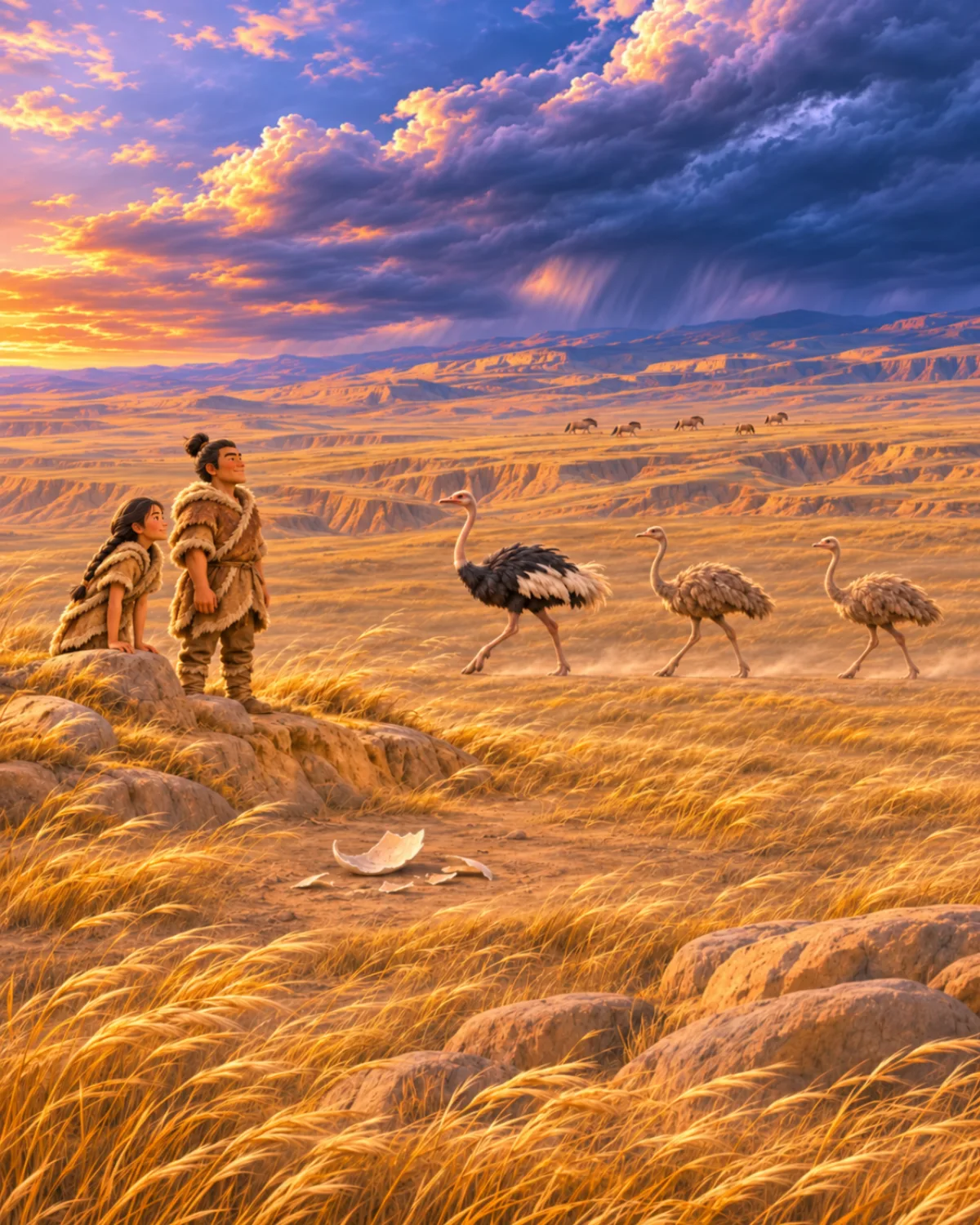
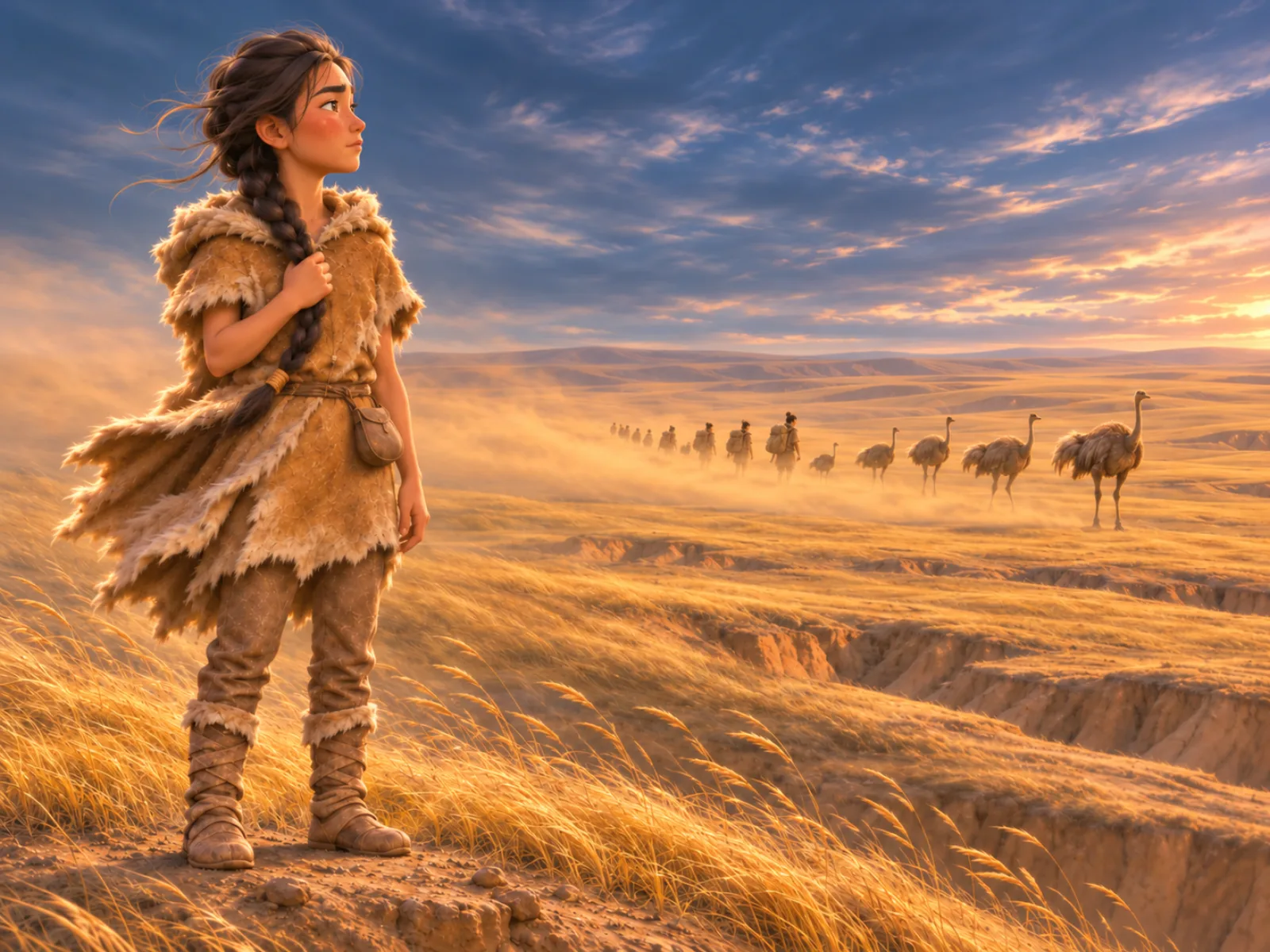
The ostriches went first. Khulan watched them from the top of the bank: a long loose line of them, heads up, walking south into the wind as if they had somewhere to be.
Her people went after them. They always did.
Below her, her sister Saya was tying the last of the water shells onto her pack. She did it badly on purpose, so it would take longer.
“You could still come,” Saya said, without looking up.
“I married him, Saya.”
“People unmarry.”
“Not in a morning.”
Their mother came over, put a hand on the back of Khulan's neck and held it there. She didn't say anything. She had said everything already, over the summer, while the two bands camped side by side and traded and the young people did what young people do when two bands camp side by side.
Then the Longstride people picked up their things and walked.
Khulan stayed on the bank until the line of them was the same size as the line of birds. Then the wind lifted a sheet of yellow dust across the plain and she couldn't see either.
Behind her, someone was already digging.
The cut
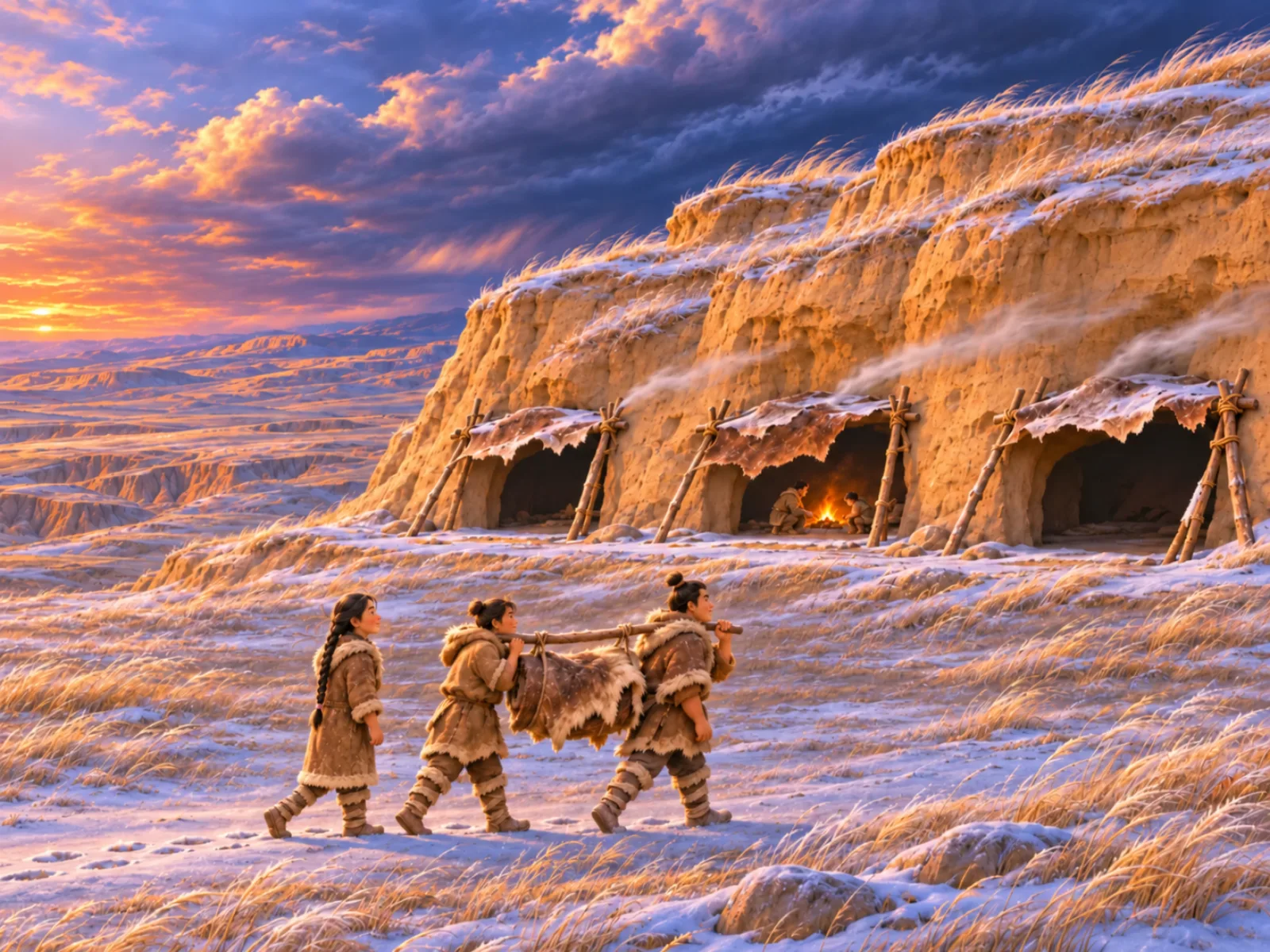
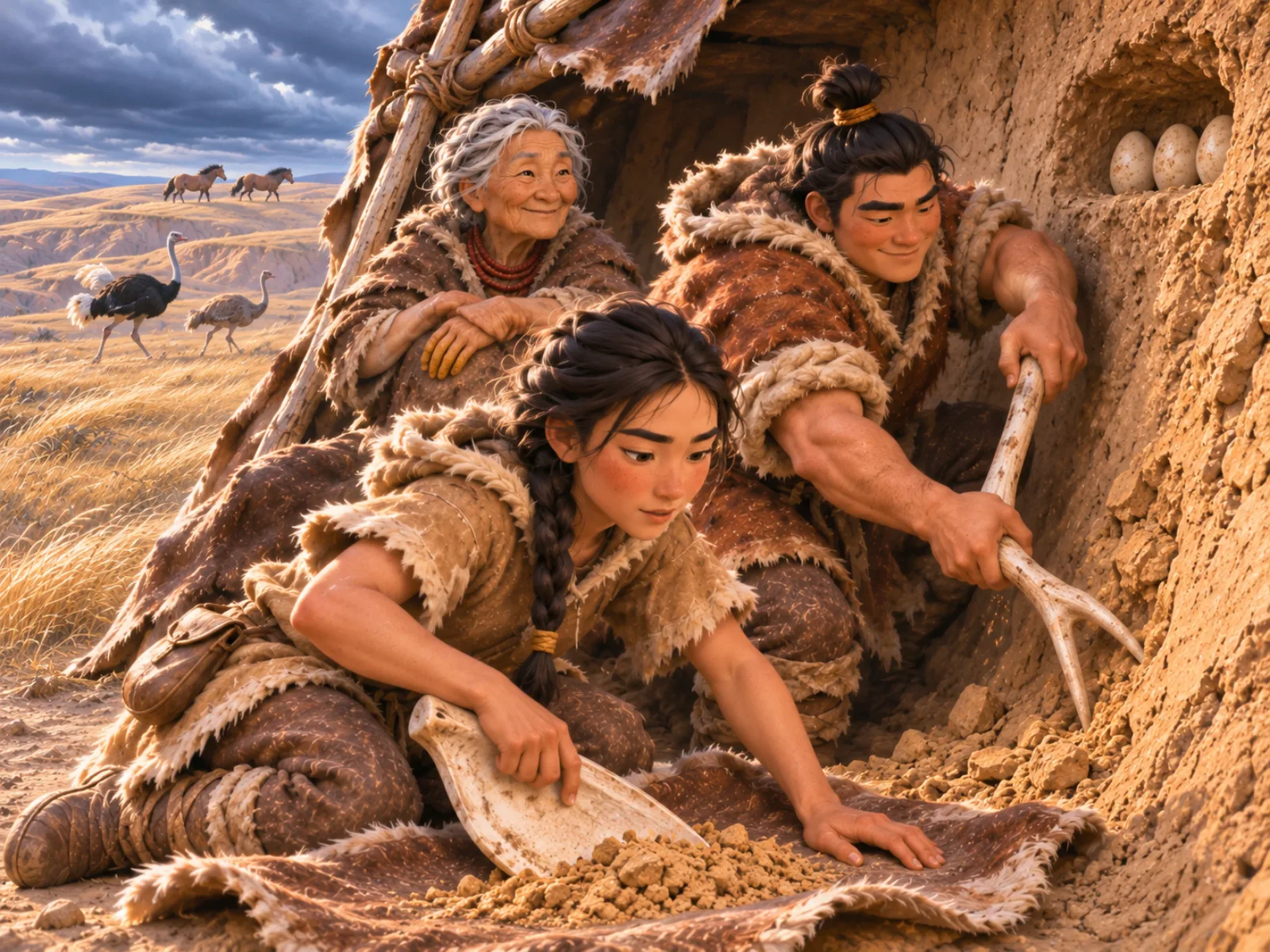
The Windbreak band had a shelter in the bank from last winter. Now they were cutting it again: deeper, wider, the walls shaved clean.
Khulan had never dug anything bigger than a fire pit. Her people didn't. You don't dig when you're leaving in three days.
Bayar handed her a shoulder blade with the edge worn smooth.
“You scrape. I'll loosen.”
He swung the antler pick into the face of the bank and the loess came away like old bread. She scraped it into a hide and someone carried it off. Then again. Then again. The whole band worked in turns, and nobody hurried, and nobody stopped.
Old Oyuna sat on a folded hide at the mouth of the cut, out of the wind, watching.
“Don't make it bigger,” she said to Khulan. “Make it better.”
“What's the difference?”
“A cut you've dug twice is worth more than any new ground.” Oyuna nodded at the wall. “Feel it.”
Khulan put her palm flat on the fresh face. It was cool on the surface and, underneath, faintly warm, like a sleeping animal.
“It keeps the day,” Oyuna said. “Every year it keeps a little more.”
By dark, the room went back a body-length into the bank. They lashed hides across the timbers at the mouth. When Khulan stepped inside, the wind was simply gone. Her ears rang with the quiet.
She lay awake a long time that night, listening to it not blow.
Winter
Drilling
When the cold came, the Windbreak band didn't go anywhere. That was the whole idea.
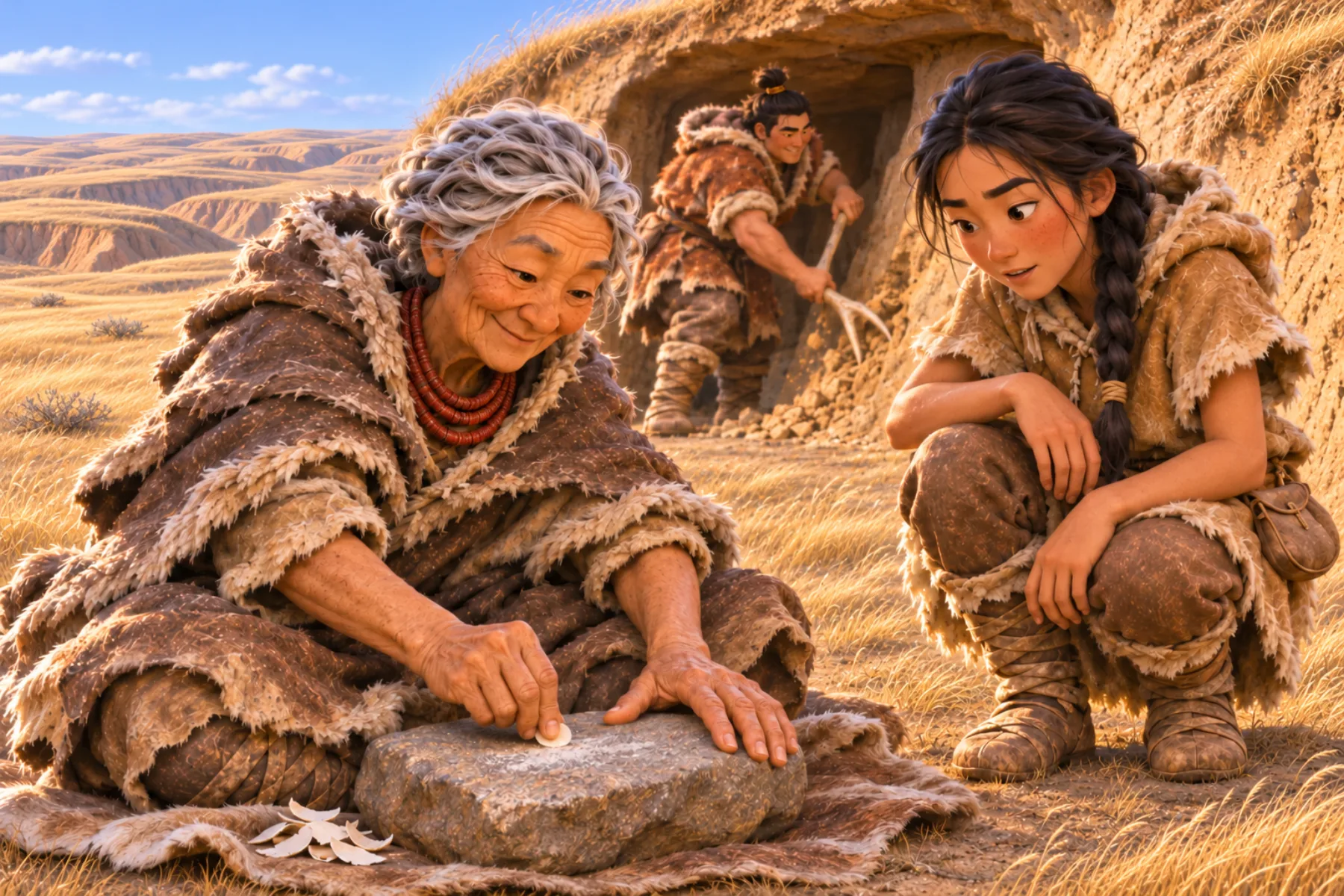
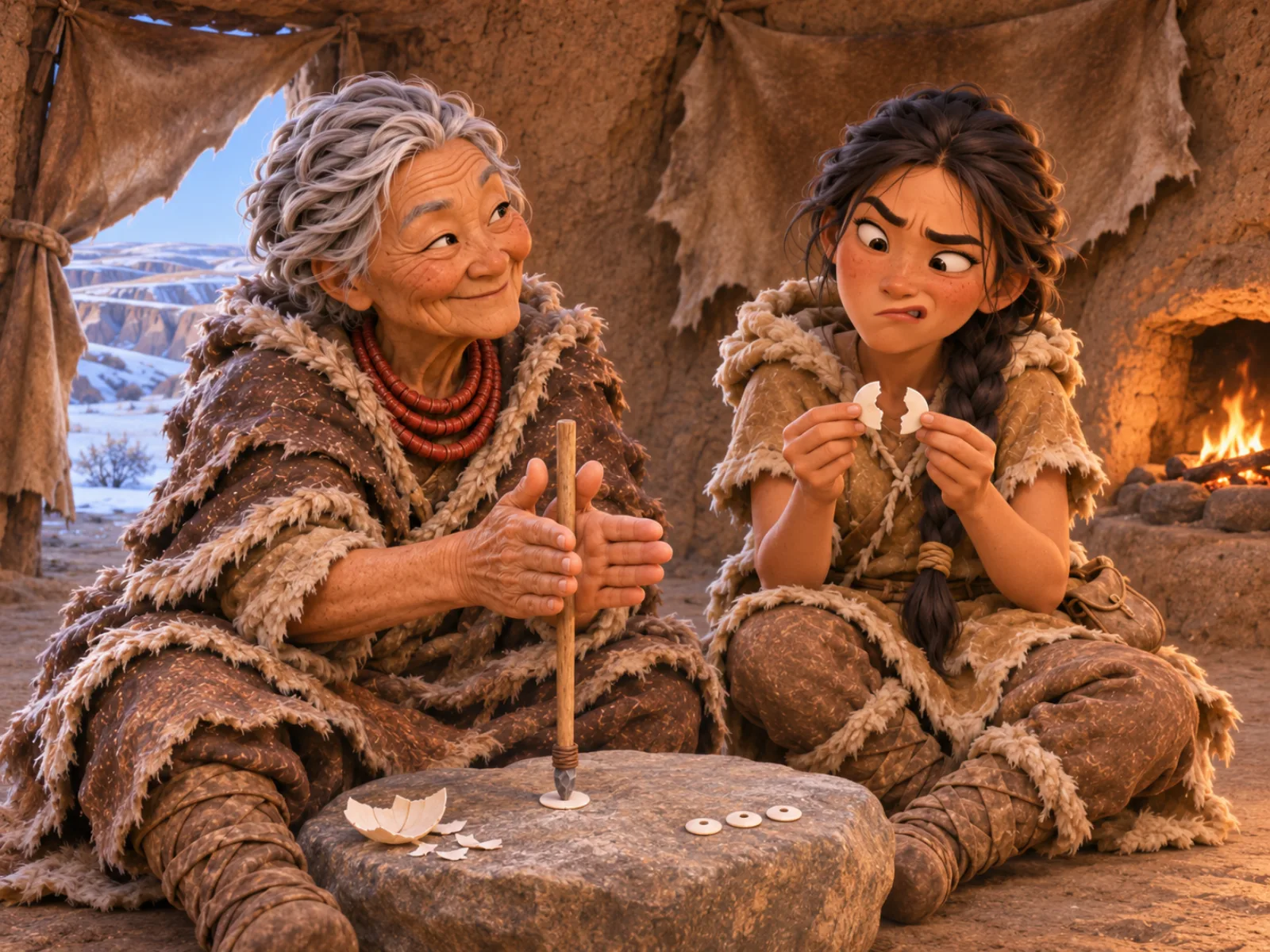
Oyuna had a basket of eggshell, the curved white pieces the wind kept turning up on the open ground. In the short winter days she ground them into rough discs against a flat stone, then sat with a stone-tipped drill between her palms and bored a hole through each one, slowly, her breath steaming.
“You try,” she said.
Khulan's people carried eggshell too, but whole, for water. Nobody in Longstride had time to sit still long enough to drill a hole through anything.
She ground a disc. She set the point. She turned the drill.
The disc split in two.
“Again,” Oyuna said.
The second one cracked at the edge. The third went to powder. The fourth held until the very end and then snapped across the hole, which was worse.
Oyuna didn't comment. She went on drilling her own, one after another, each one coming out round and whole, like it was the easiest thing in the world.
That night Khulan put the broken pieces in a small pouch and pushed the pouch under her bedding where nobody would see it.
By midwinter the pouch was full.
Dust
The storm came on the wind from the north and stayed for four days. Fine yellow grit got into everything: food, hair, the corners of your eyes. Nobody went out. There was nothing to go out for.
Khulan sat against the back wall and thought about where her people were. Somewhere south, walking. They'd be cold and hungry and moving, and her mother would be complaining about her knees, and Saya would be telling everyone a story she'd already told.
She missed them so much her chest hurt.
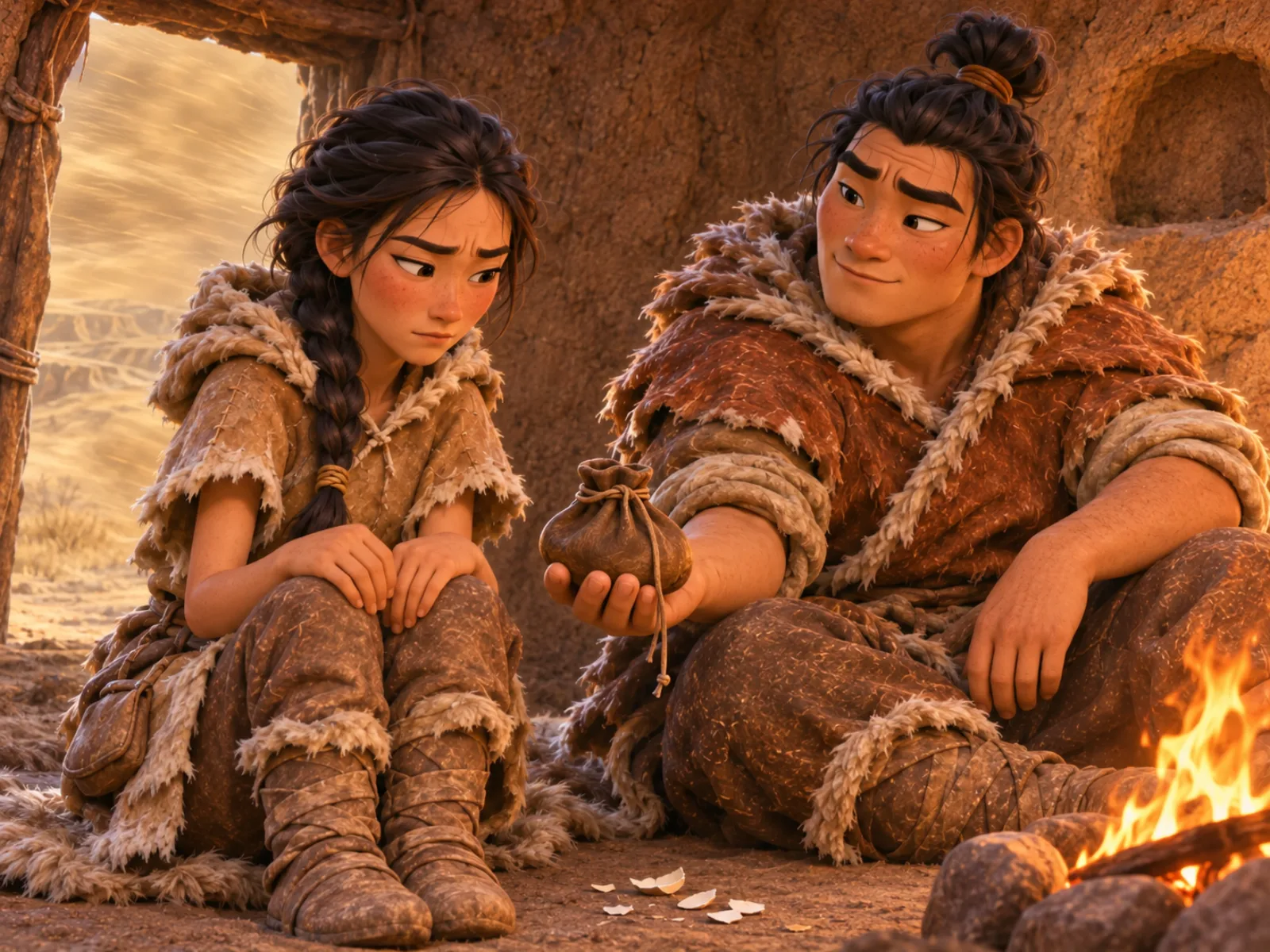
Bayar sat down beside her. He had the pouch in his hand.
“This was under your bed,” he said. “I thought it was food.”
She took it from him too fast. A few pieces fell out onto the floor between them, white against the trodden earth.
He picked one up and turned it over. “Are these yours?”
“They're nothing.”
“There are a lot of them.”
“I know how many there are, Bayar.”
He was quiet for a while. Outside, the wind pushed at the hides.
“Mine broke too,” he said. “When I was learning.”
“You were a child.”
“I was eleven. I threw them in the fire.” He put the piece back in the pouch. “Oyuna was furious. I never understood why.”
The wall
When the storm cleared, Oyuna asked Khulan to walk with her. She wanted to show her something, she said. She didn't say what.
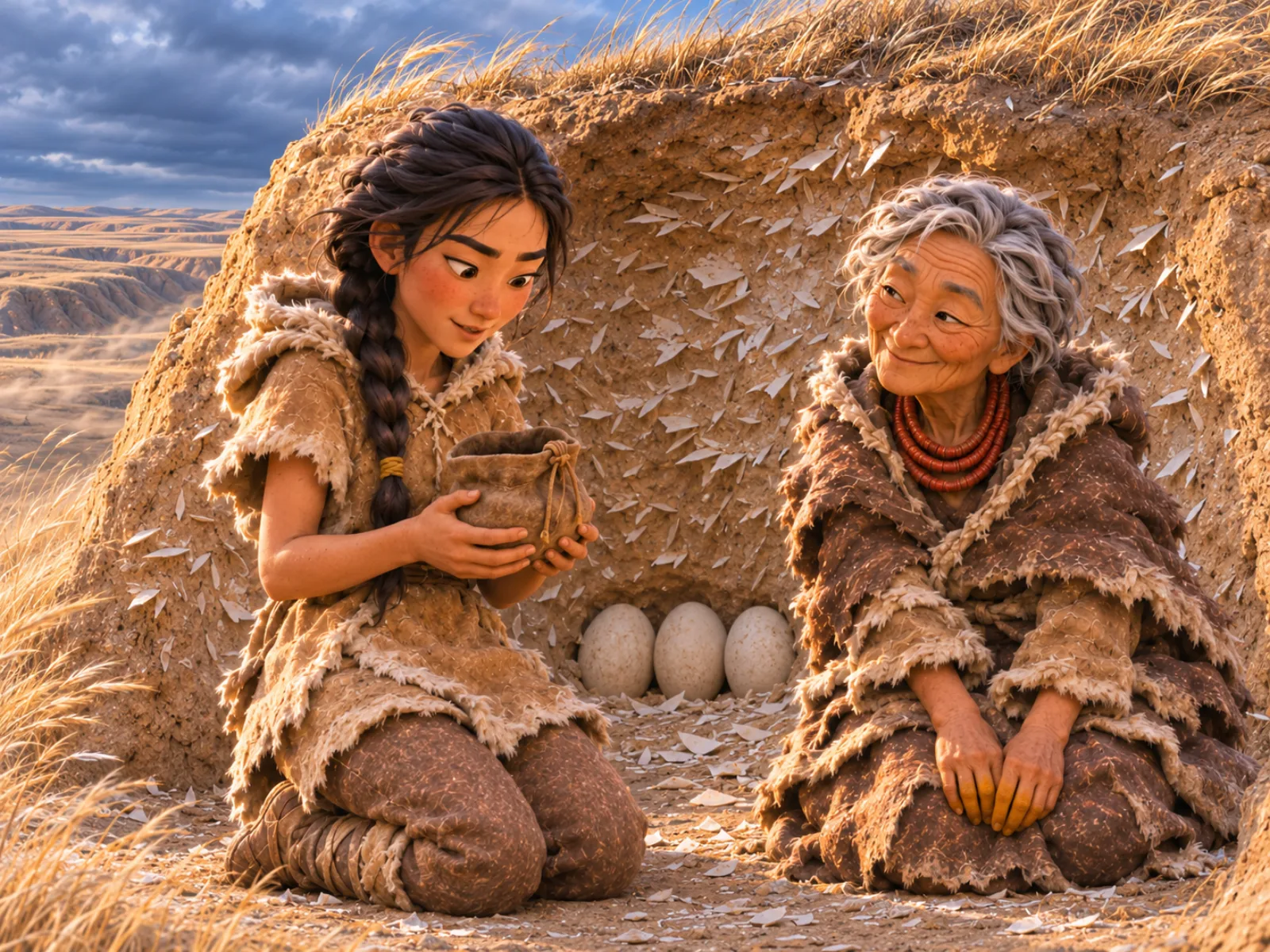
They went along the bank, past the band's shelters, to a place where the loess had been cut into a small niche, just big enough for three people kneeling. The ground outside it crunched under their feet.
Khulan looked down. The ground was white with shards.
Then she looked at the wall.
The whole back of the niche was studded with pieces of eggshell, hundreds of them, pressed into the soft face edge-on, so they caught the low light. Broken discs. Cracked blanks. Beads split clean through the hole. At the very back, where the light didn't reach, three whole eggs stood upright.
“What is it?” Khulan said.
“Everything that didn't work.” Oyuna lowered herself onto her knees with a grunt. “Everyone who ever sat and tried. My mother's are in there. Mine are.”
“Which ones are yours?”
Oyuna looked at the wall for a while.
“I don't know anymore,” she said. “That's the point.”
Khulan held the pouch in both hands. She thought about Bayar throwing his into the fire, and about Oyuna being furious.
She opened it. She found a place, turned the first broken disc until its edge sat flush, and pushed. The loess took it.
Then the next one. Then the next.
Oyuna didn't help, and didn't watch. She just knelt there beside her until the pouch was empty.
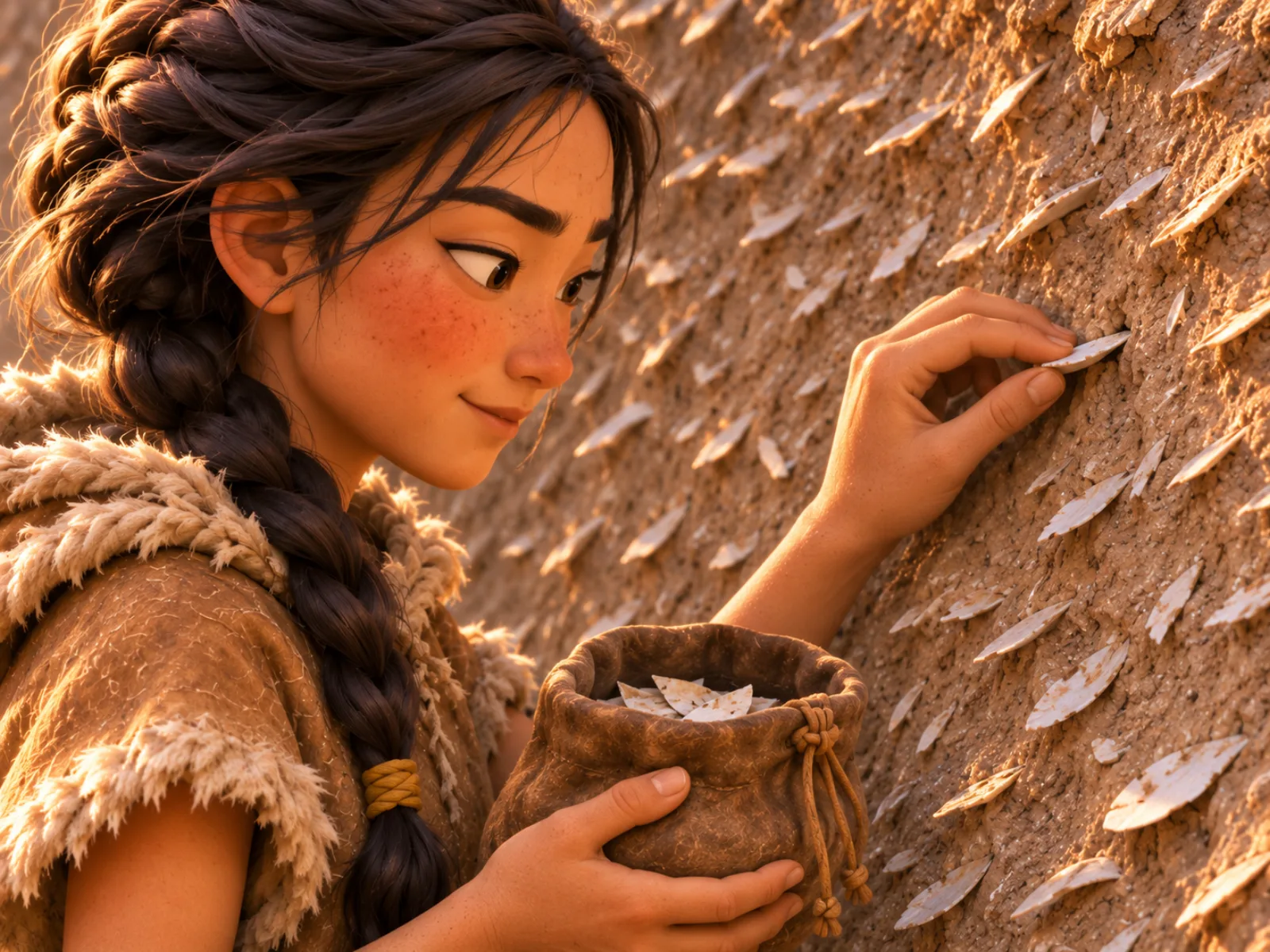
When Khulan stepped back, she couldn't tell which ones were hers.
A red strand
She kept drilling. It didn't get easy. But some of the discs started to hold, one in five, then one in three, and the ones that broke went into a new pouch and then into the wall, and nobody hid anything.
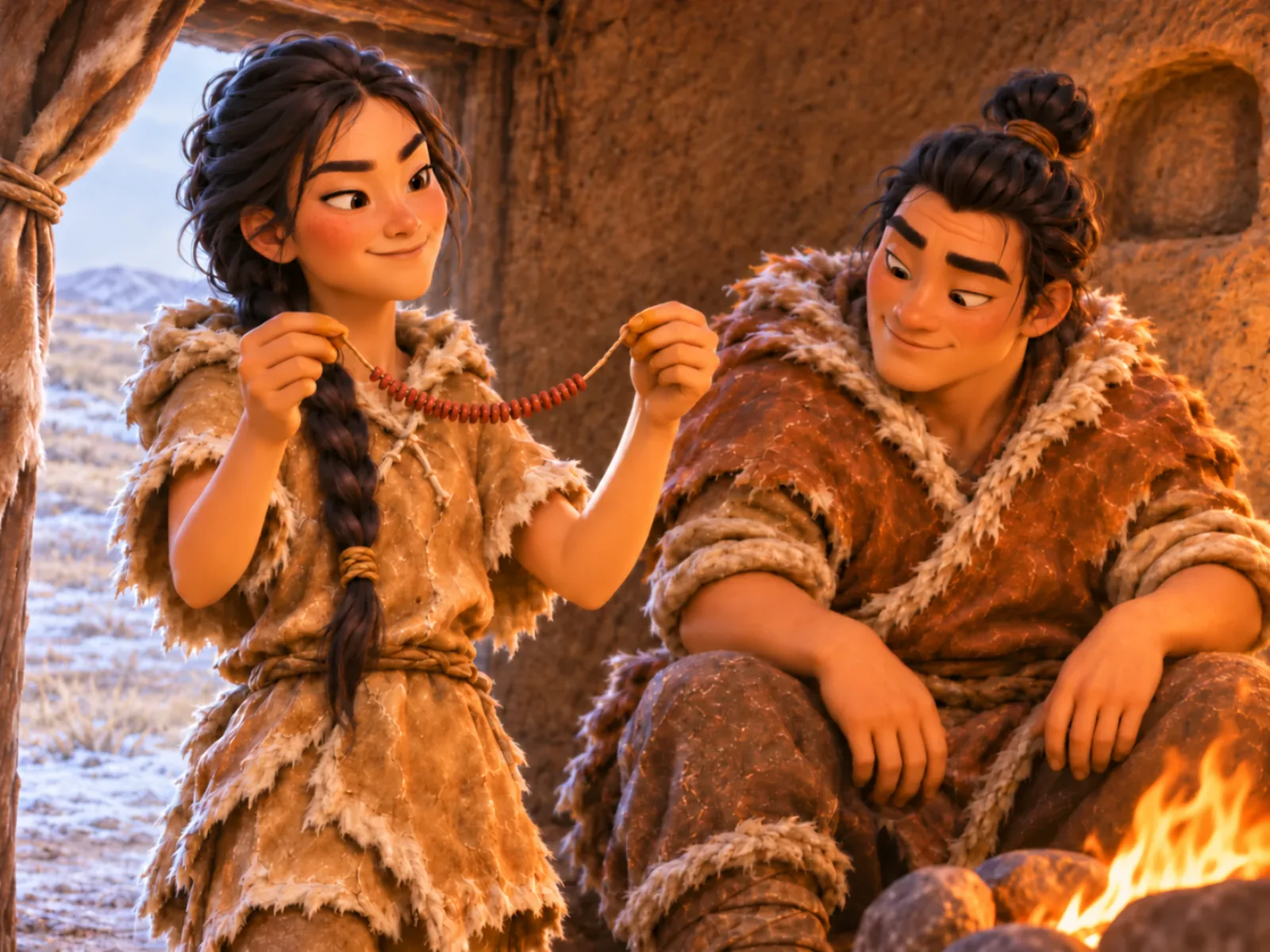
Near the end of winter, Oyuna showed her how to finish them. You rub ochre into the discs until they go deep red, and you thread them close on sinew.
Khulan held up her first strand in the doorway light. Twenty-two beads. Not quite even. They sat in a row like small red suns.
Bayar looked at it for a long time.
“People will know where that came from,” he said.
“Because it's uneven?”
“Because it's from here.”
Spring
When the birds came back
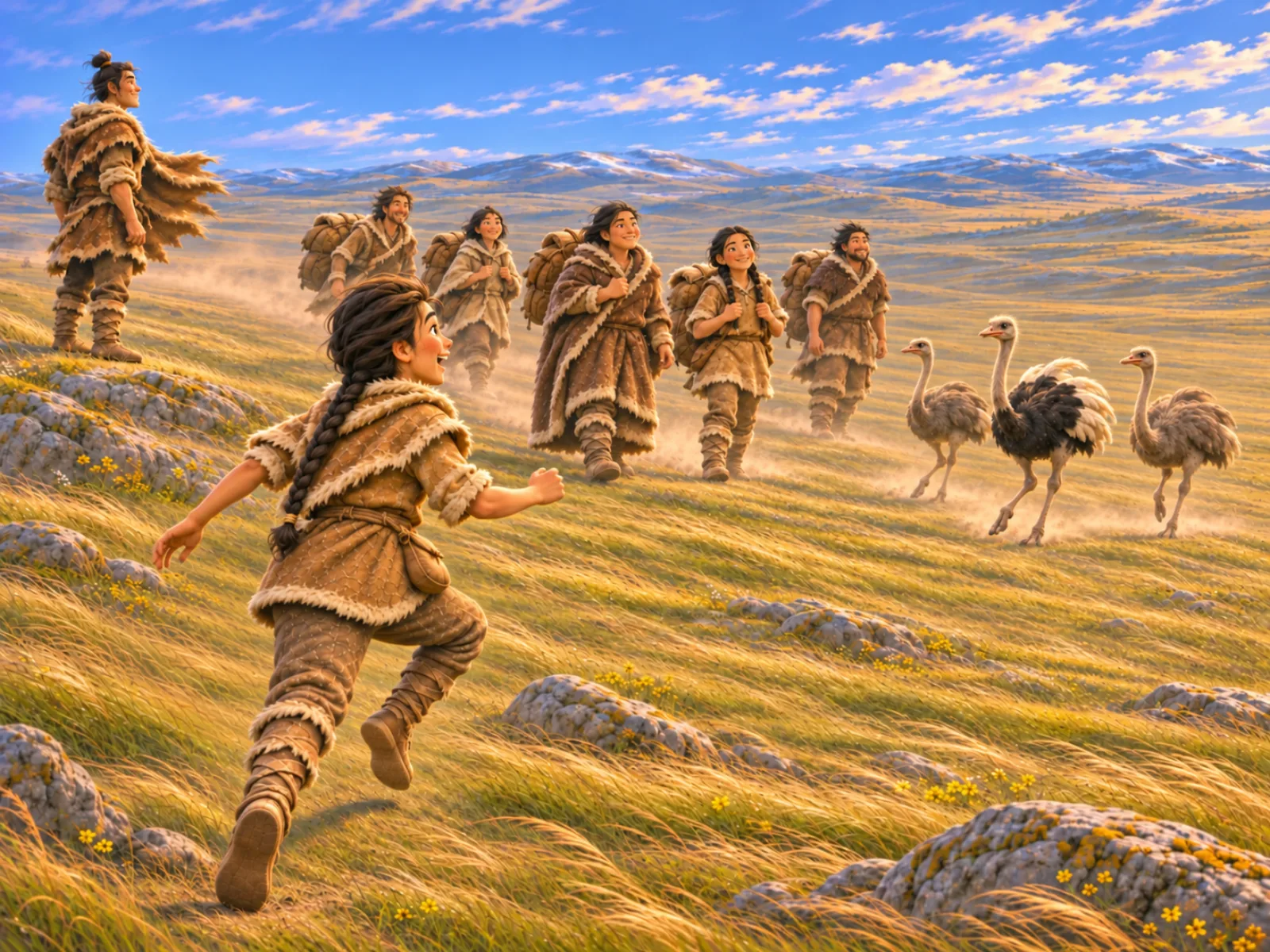
In spring, the ostriches came back across the plain, and her people came after them.
Khulan saw the dust of them first, then the line of birds, then the line of people. She was down the bank and running before she'd decided to.
Saya got to her first and nearly knocked her over. Her mother held her face in both hands and looked at it, the way you look at something to make sure it's the same.
“You're thin,” her mother said.
“Everyone's thin in spring.”
They camped for two nights. Khulan told them about the cut, and the four-day storm, and how the walls stay warm. Saya didn't believe that part, so Khulan took her into the shelter and put her hand on the wall.
On the second morning, while the Longstride people were tying their packs, Khulan gave Saya the red strand.
Saya turned it over in her fingers. “You made this?”
“Most of it broke first.”
Saya put it on. Then she looked at her sister, and Khulan knew what she was going to say before she said it.
“There's still room in the line.”
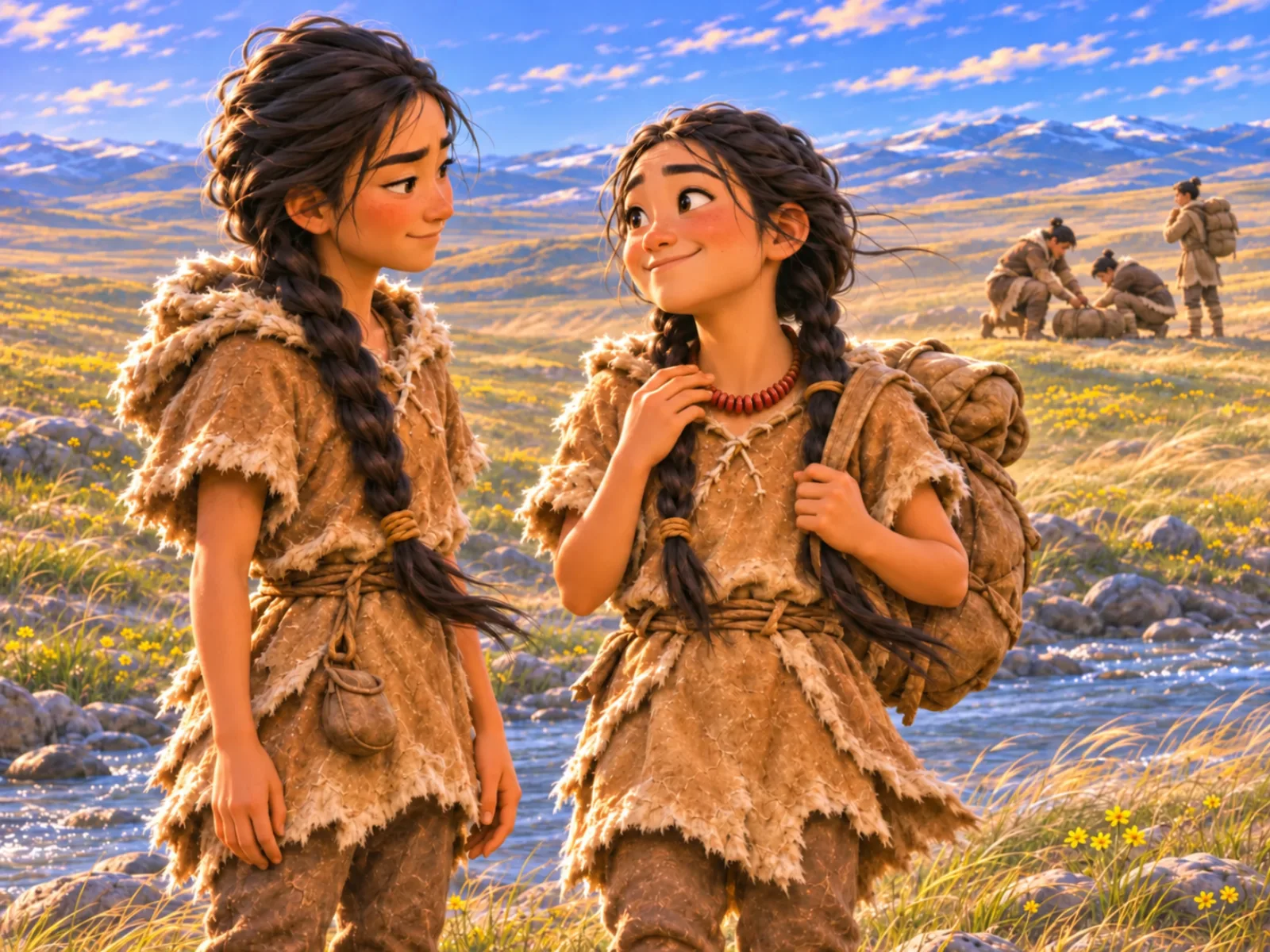
Khulan looked past her, at the bank and the dark mouths of the shelters. Bayar was at the top, pretending not to watch. Somewhere along from him, in a niche you could hear before you reached it, her broken pieces sat in the wall with everyone else's.
“I know,” she said. “I'm staying.”
Saya nodded slowly. She touched the beads at her throat.
Then the ostriches moved, and the people moved after them, and Khulan stood on the bank and waved until they were the size of the birds.
She went back down. There was a new disc waiting on the flat stone.