
A story from the World's Edge
A Little Longer
About 10 minutes
The warm side
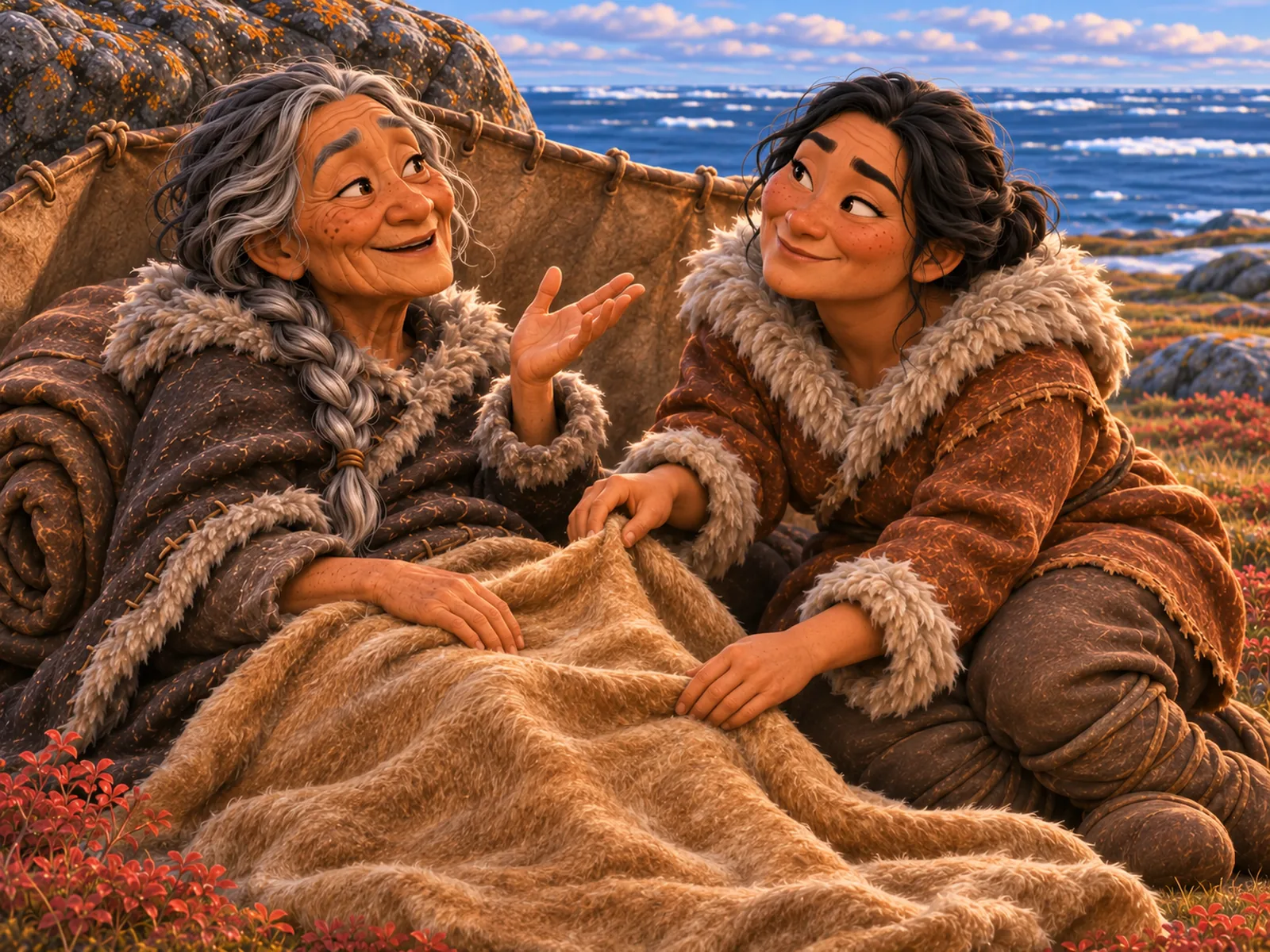
Nuna wanted the hide turned over.
“The other side is warmer,” she said.
Siku put her hand under it. Both sides felt warm to her. She turned it over anyway and tucked the edge around her mother's feet.
“Better?”
“I'll tell you when you stop pulling it so tight.”
Siku loosened it. Nuna moved one foot, then the other, and settled back against the rolled hide behind her.
“Better,” she said.
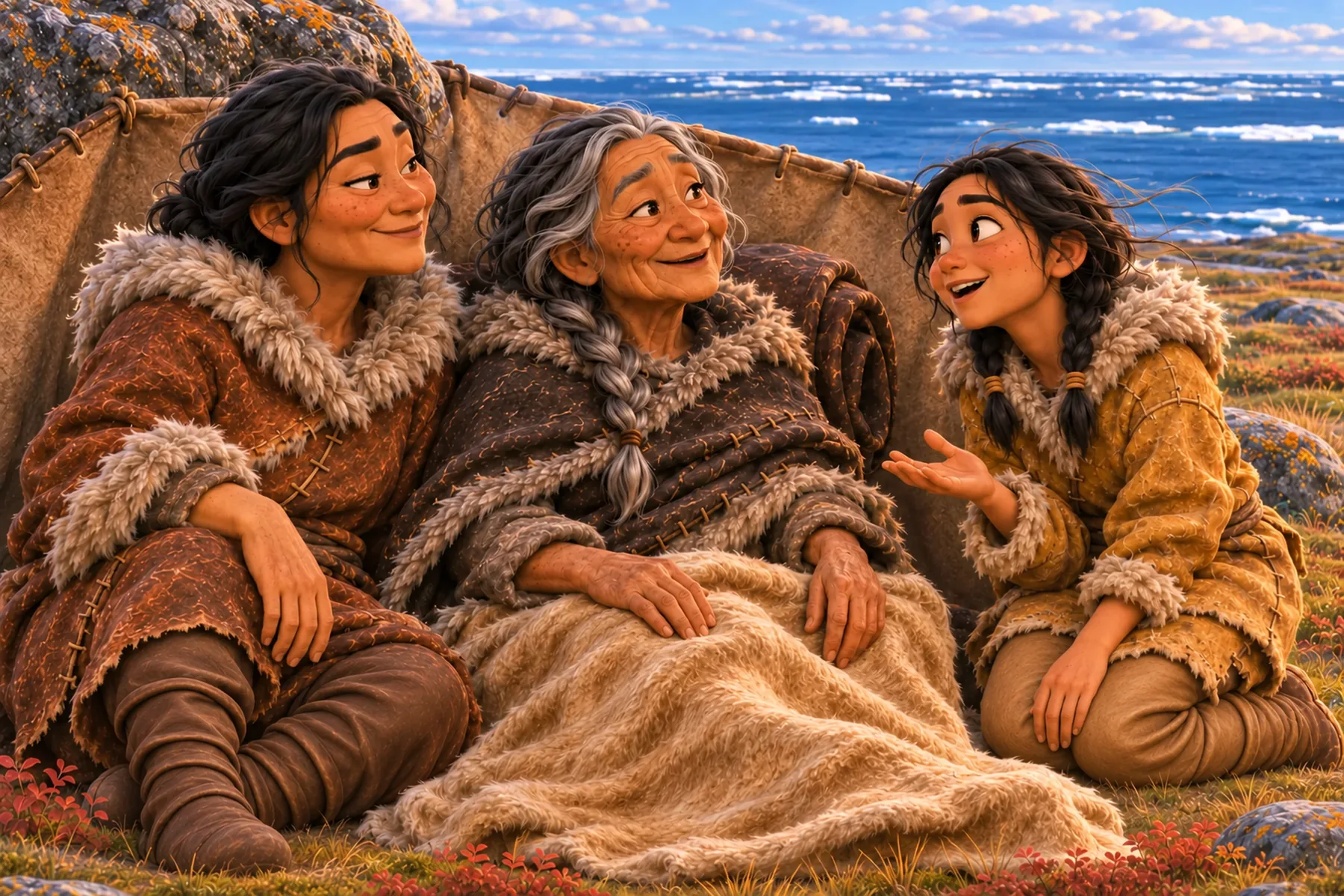
Siku was forty-four. She had been helping her mother get comfortable for long enough to know that asking once was rarely enough. Nuna liked the covering loose at her feet and close at her shoulders. She wanted her head raised until she didn't. Some mornings she wanted Siku beside her before she opened her eyes; other mornings she wanted her to stop looking and go and eat.
This morning she wanted the warm side of the hide.
Qannik came in from outside, carrying a piece of food in a fold of hide. She was thirteen, all quick movements, and she stopped just short of stepping on Siku's foot.
“That's a good place for it,” Siku said.
“My foot or the food?”
“Both, apparently.”
Qannik crouched beside her grandmother. Nuna looked at what she had brought.
“Did you leave any for yourself?”
“Yes.”
“Did you leave any for your mother?”
Qannik considered the question.
Siku reached for her, and Qannik moved away, laughing. Then she came back and helped her grandmother sit a little higher. Nuna ate a few small bites, slowly, while the two of them stayed beside her. When she had had enough, Qannik wrapped the rest to keep it for later.
Outside, the wind moved over the low ground toward the water. Siku could hear people talking near the fire. Someone called Qannik's name, and Qannik looked toward the opening.
“Go,” Nuna told her.
“I can stay.”
“I know. Go and find out what they want.”
Qannik left the food where her mother could reach it and went out. Nuna waited until she was gone.
“She didn't leave you any, did she?”
“She says she did.”
Nuna raised her eyebrows. Siku found herself laughing even though she was hungry enough to be annoyed.
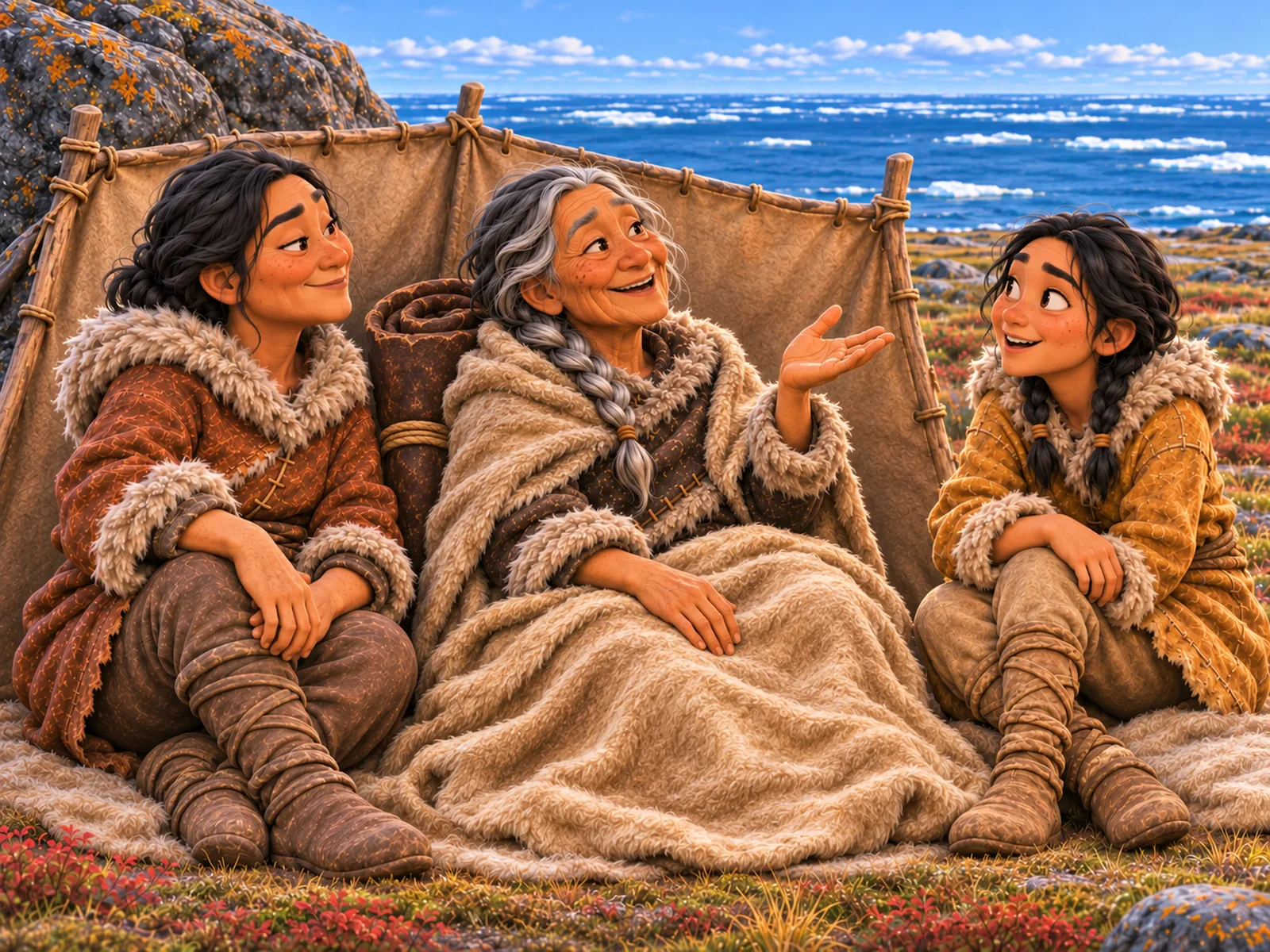
A place in the conversation
Later that day two people came by with fuel and news. Siku made room for them, and one of them set down a bundle near the fire. They had been out along the shore and had seen birds lifting from a distant stretch of rock.
“Too far to see what they were after,” one said.
“You couldn't see because you were looking the wrong way,” said the other.
Nuna had been resting with her eyes closed. She opened one.
“Is this the part where you both tell it?”
“It happened to both of us.”
“That has never stopped one of you before.”
The visitor nearest her sat down. “I saw them first.”
“You heard them first,” said the other.
Qannik came in behind them and sat near Nuna's feet. She had found the piece of food she had saved and was eating it. Siku gave her a look. Qannik broke it in half and held some out.
Nuna watched the exchange. “I knew there was some.”
They stayed a while. Nuna spoke less than she once would have, but she listened to the argument about the birds and corrected a detail about the shore that both visitors had got wrong. When they left, she asked Siku to move the fuel out of the way before somebody fell over it.
“I was going to,” Siku said.
“I know. You were waiting for somebody to fall first.”
Siku moved it. She found she was glad to be told what to do. Her mother had a way of making a request sound as though Siku had been slow to think of it herself. It had annoyed her for years. She would have liked to hear it for years more.
That evening Nuna was uncomfortable again. Siku helped her shift, then held a drink where she could take it. Qannik warmed another hide by the fire and brought it over when her grandmother asked for it. The first time, it was too warm. The second time, Nuna kept it.
“I got it right,” Qannik said.
“You did. Remember how.”
“I'll try to remember the part where you changed your mind.”
Nuna smiled. It was a small smile, but Qannik saw it and smiled back.
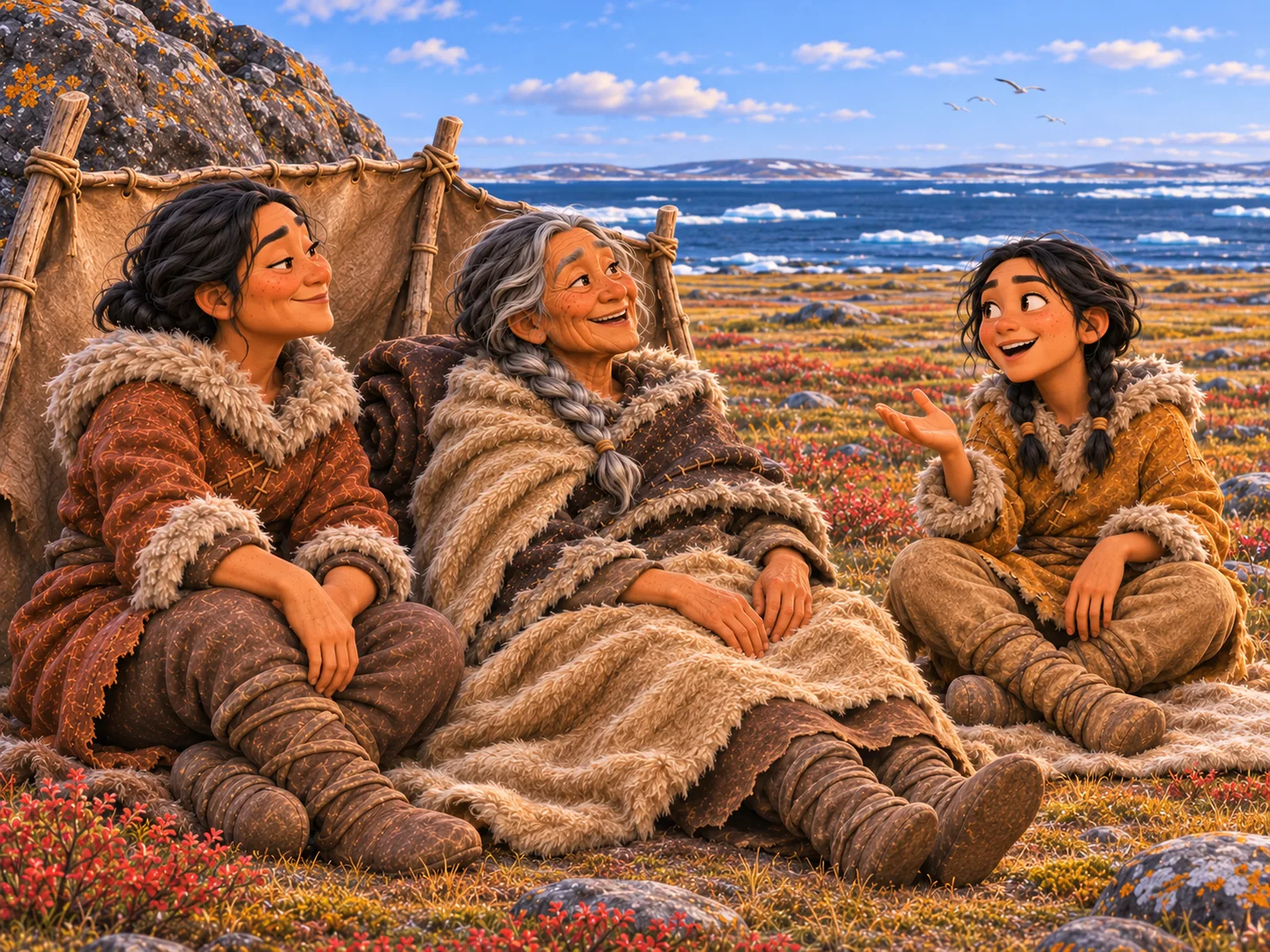
Where the light reaches
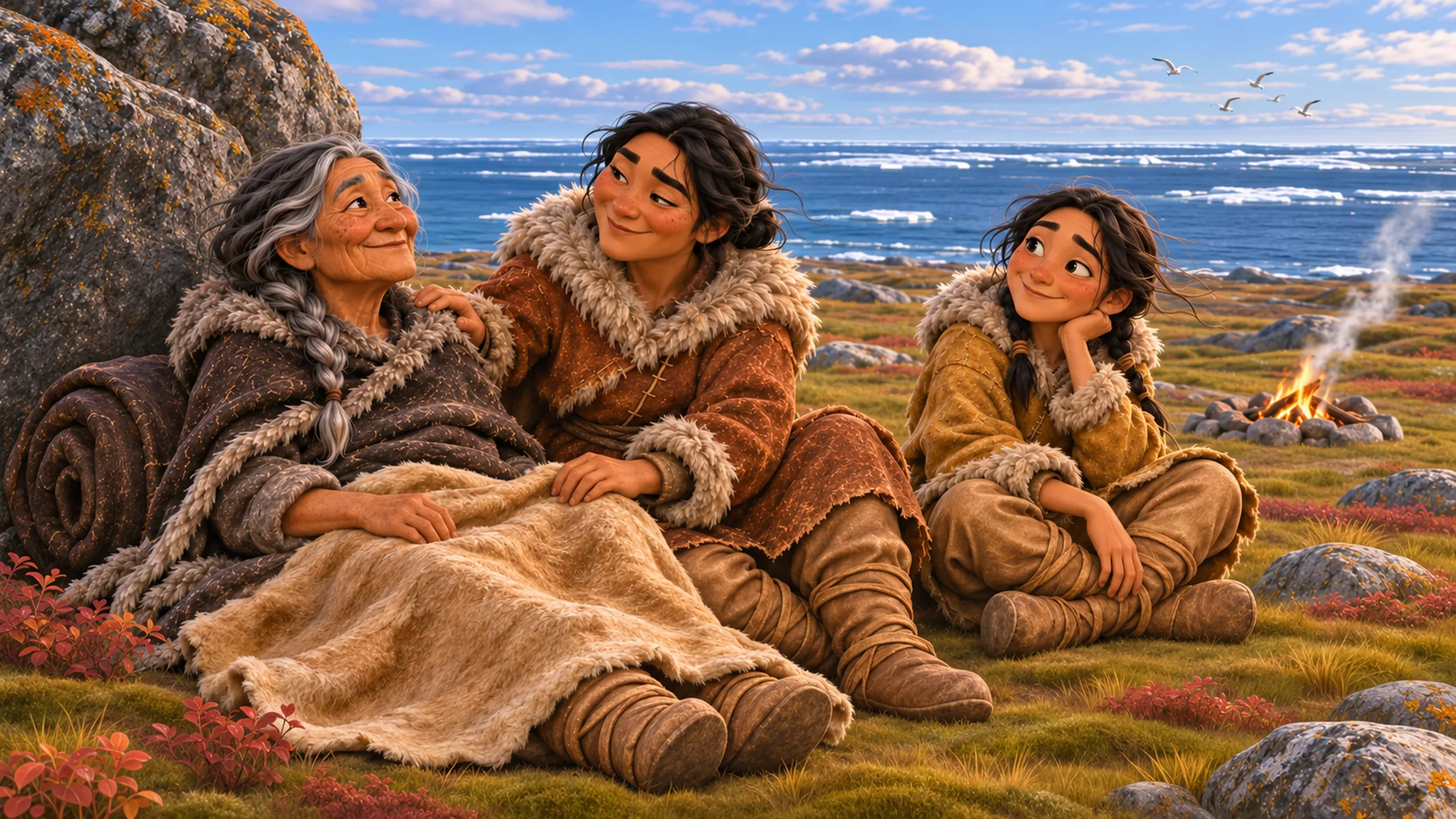
The next day the wind eased. Light reached the ground just outside the shelter, and Nuna asked to sit there.
Siku looked out. The place was level and sheltered by rock, well back from the shore. She spread a hide on the ground while Qannik fetched the one Nuna liked around her shoulders.
Together they helped her up. They took their time. Nuna put her hand on Siku's arm and waited when she needed to wait. Qannik walked on her other side, close enough to help without taking hold until she was asked.
When they had settled her on the hide, Nuna sat for a moment with her eyes closed.
“Is this all right?” Siku asked.
“Ask me once more and I'll go back inside.”
Siku sat down beside her. Qannik sat on the other side.
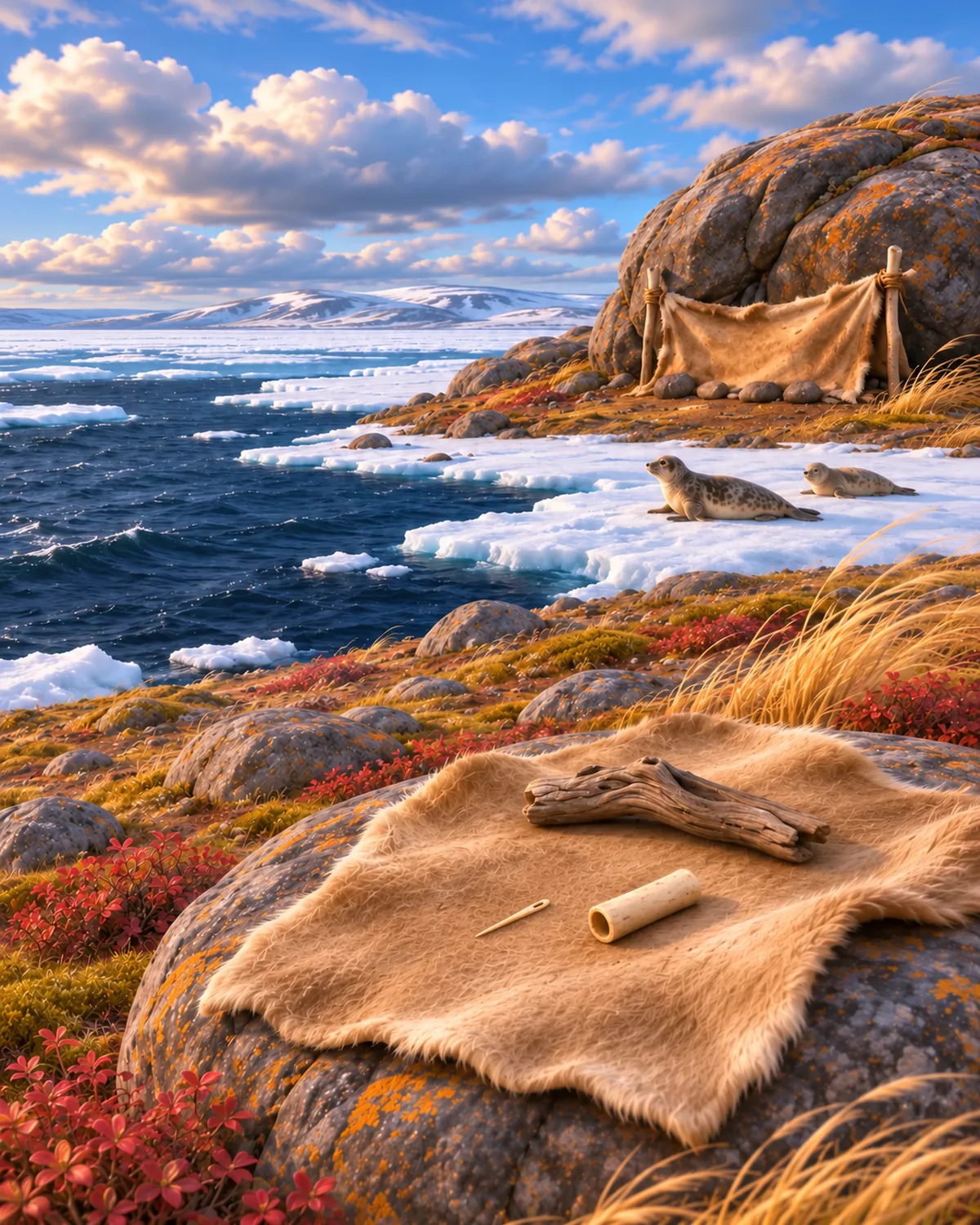
The water was dark beyond the pale ice. Birds moved over it, small at that distance, then wheeled toward the rocks. There was a stretch of open ground between the family and the shore. People crossed it carrying things, stopping now and then to speak to one another.
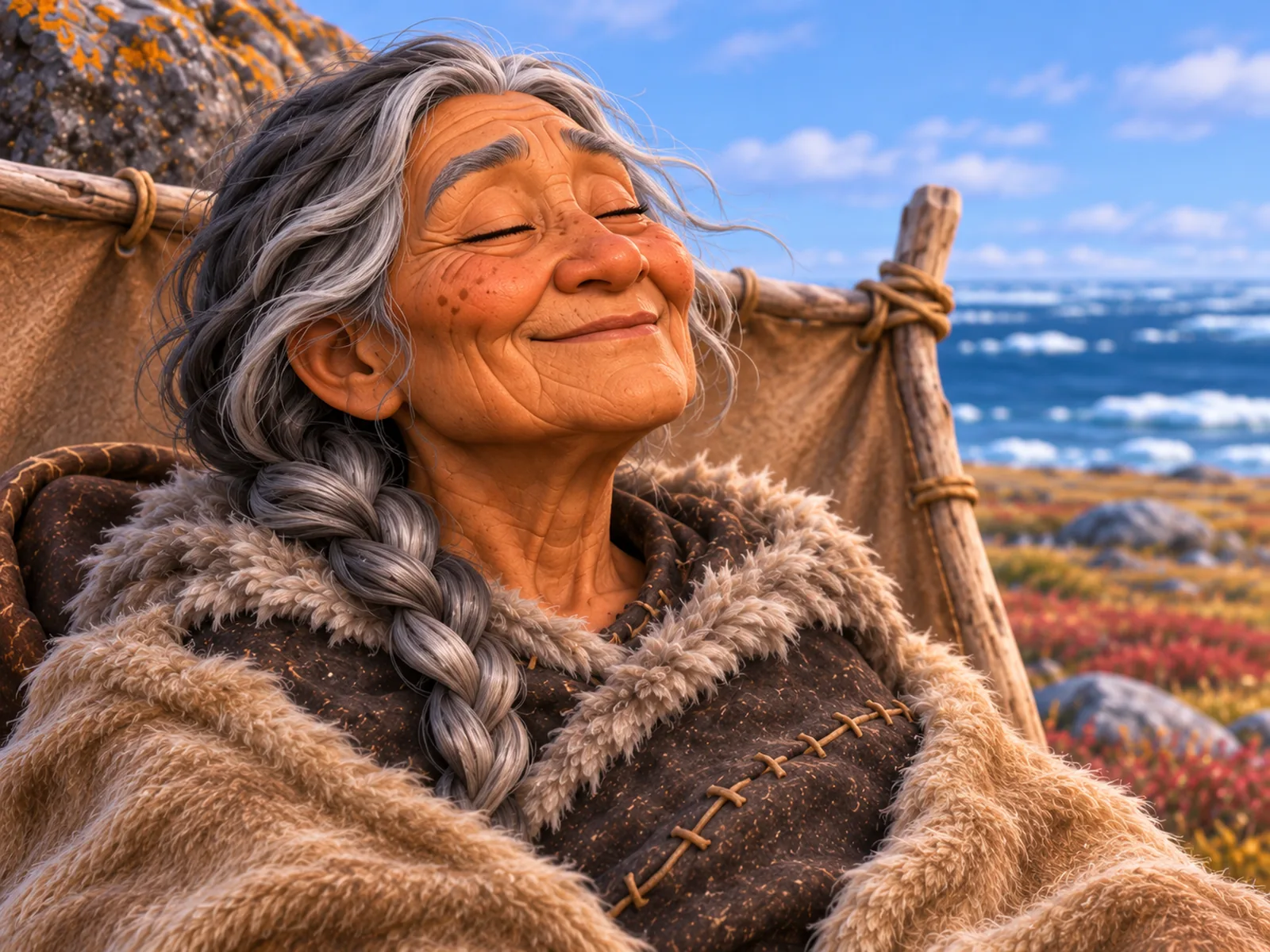
Nuna lifted her face into the light.
Qannik began telling her about an argument she had heard that morning. She told it badly at first, leaving out who had said what, then began again when her grandmother asked. Siku had heard it too, but she let Qannik tell it.
At the best part, Qannik forgot the words and laughed before she could finish. Nuna waited, looking at her.
“That's not the part I want,” she said.
“I know. I'm trying.”
When Qannik finally got it out, Nuna laughed too. Siku watched her, wanting to remember the sound and not wanting to be the kind of person who had already begun trying to remember it.
They stayed until Nuna said she was cold. Then they helped her back inside. She was tired afterward and wanted to lie down. Siku settled the hide at her shoulders and left it loose around her feet.
“You remembered,” Nuna said.
“I have been told.”
“More than once.”
“More than once.”
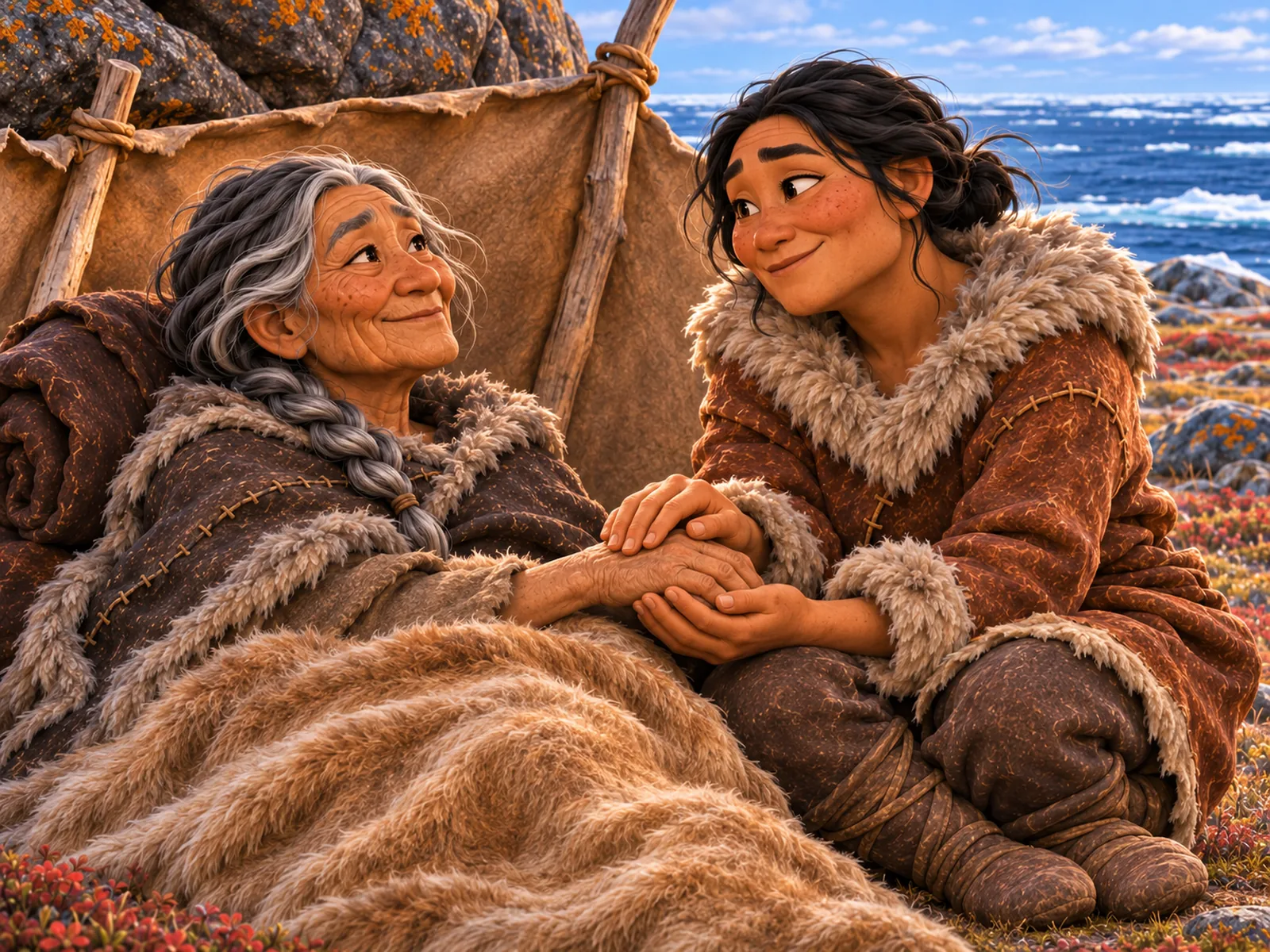
What she asked for
Over the following days Nuna slept more. Sometimes she woke and wanted to know who was outside. Sometimes she wanted water or a little food. Siku and Qannik brought what she asked for, and other people came and sat with her too.
One afternoon Siku was working the edge of a hide between her hands when Nuna woke. Siku set it aside and leaned close.
“Do you want a drink?”
“In a moment.”
Siku stayed where she was. Her mother looked at her for a long time.
“You haven't been sleeping enough,” Nuna said.
“Neither have you.”
“I'm getting more than you.”
Siku wanted to argue, but her mother was watching her too closely. She took the edge of the covering and smoothed it across Nuna's shoulder.
“I'm tired,” Nuna said.
“I know.”
“No. I mean I'm tired now.”
Siku understood her. She had been trying not to understand for days.
“I don't want you to go.”
Nuna's hand moved under the hide. Siku found it and held it between both of hers.
“I know that too,” Nuna said.
They were quiet. From outside came Qannik's voice, then another voice answering her. Siku could hear the wind at the opening and the small sounds of people moving around the fire.
“Can you stay with me?” Nuna asked.
“Yes.”
“And can I have that drink now?”
Siku laughed once, though her face was wet. She helped her mother drink, then put the water within reach and sat down again.
When Qannik came back, she sat on the other side. Nuna asked her what had happened outside. Qannik told her, and Nuna listened until she fell asleep.
Beside her
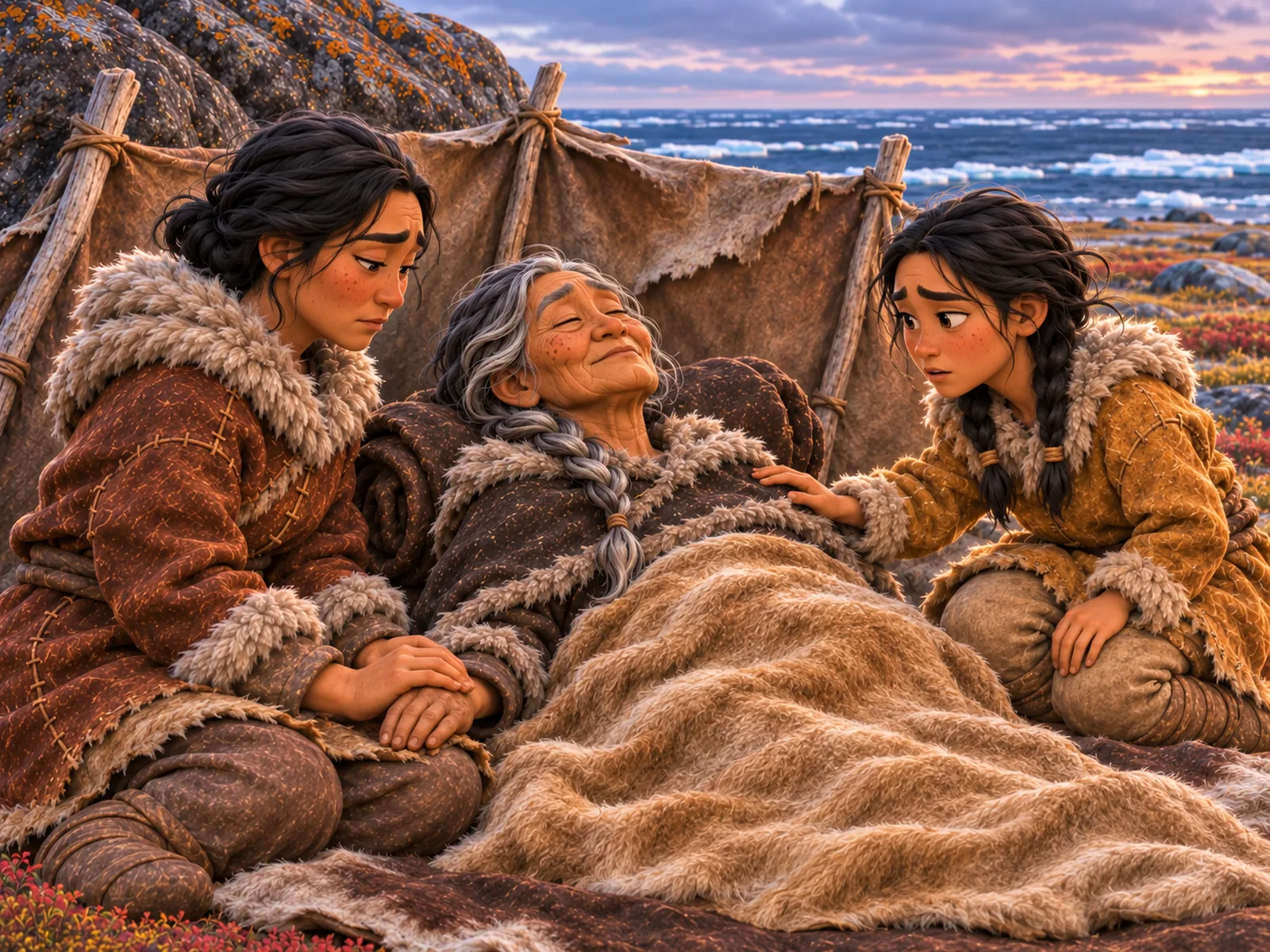
That night Siku stayed close. Another person brought fuel and sat with them for a while, leaving only when Siku said she had what she needed. Qannik slept nearby, waking once to ask if her grandmother wanted the covering moved. Nuna did, and the three of them worked it loose together.
Siku offered her mother water when she woke. She held her hand. She adjusted the hide again when Nuna's shoulder was uncovered.
Near morning Nuna opened her eyes and found Siku beside her.
“There you are,” she said.
“I'm here.”
Nuna's hand was in hers. Siku kept talking, though she could not remember afterward everything she said. She told her that Qannik was close. She told her who had brought the fuel. She told her the covering was where she wanted it.
At some point her mother stopped answering. Siku stayed beside her, watching her face, holding her hand. She knew when Nuna had died, though she went on holding it for a while.
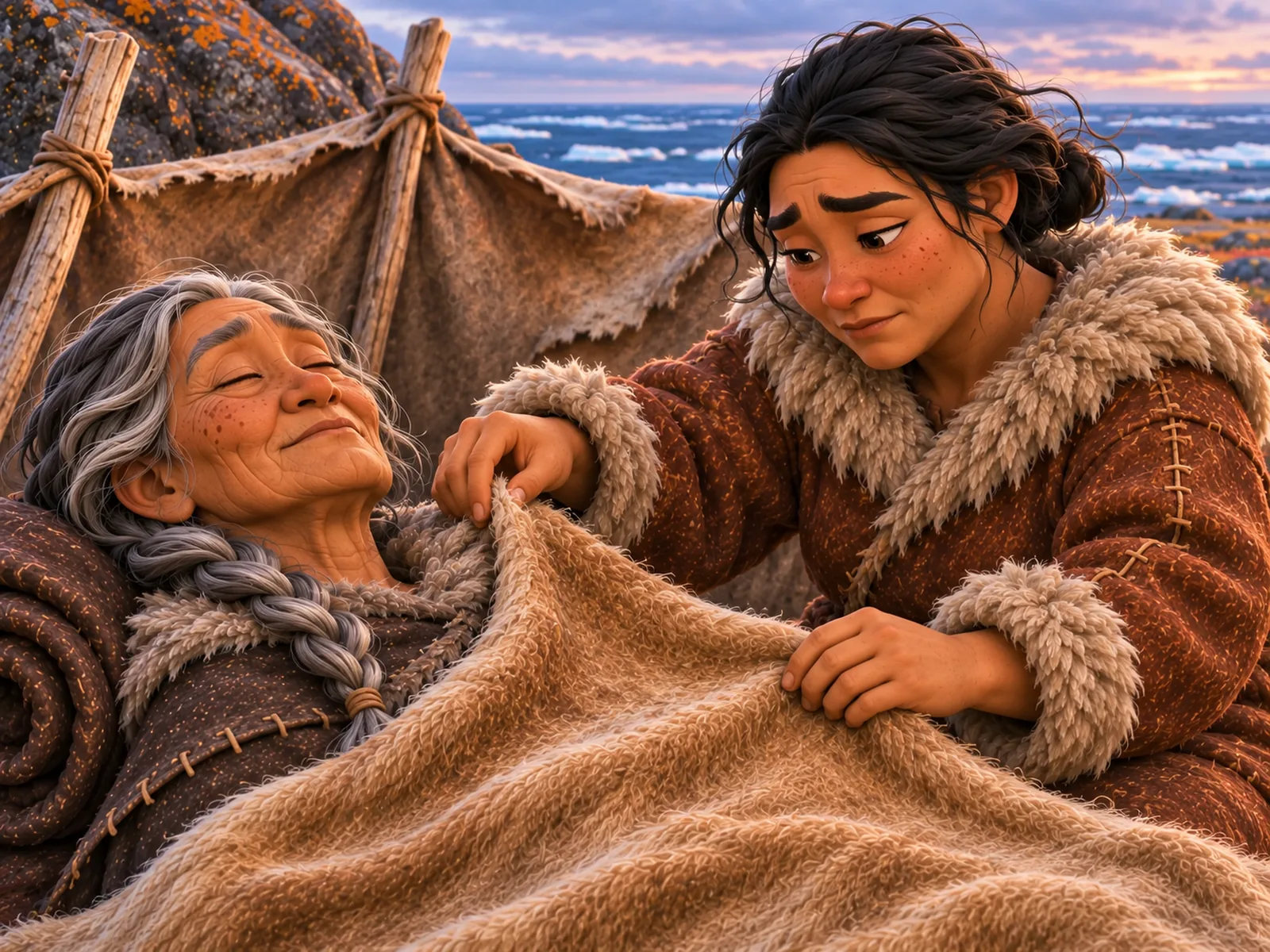
The hide had slipped at her mother's shoulder. Siku pulled it up, just as she had so many times before. Then she sat with her hand resting there.
Qannik woke and came to them. Siku made room for her. Qannik touched Nuna's arm, waited, and touched it again.
“Grandmother?”
Siku put an arm around her. Qannik pressed her face against her mother's shoulder and cried. Siku held her, looking over her head at Nuna, who was still there and would not answer either of them again.
Someone came when Siku called. They stayed with the family and helped with what needed doing. Siku was grateful for the help, though she could not have said so then.
The question
The next day people brought food. Siku accepted it because Qannik needed to eat and because the people bringing it had come a little way to see them. She ate some herself. She could taste it, which felt strange.
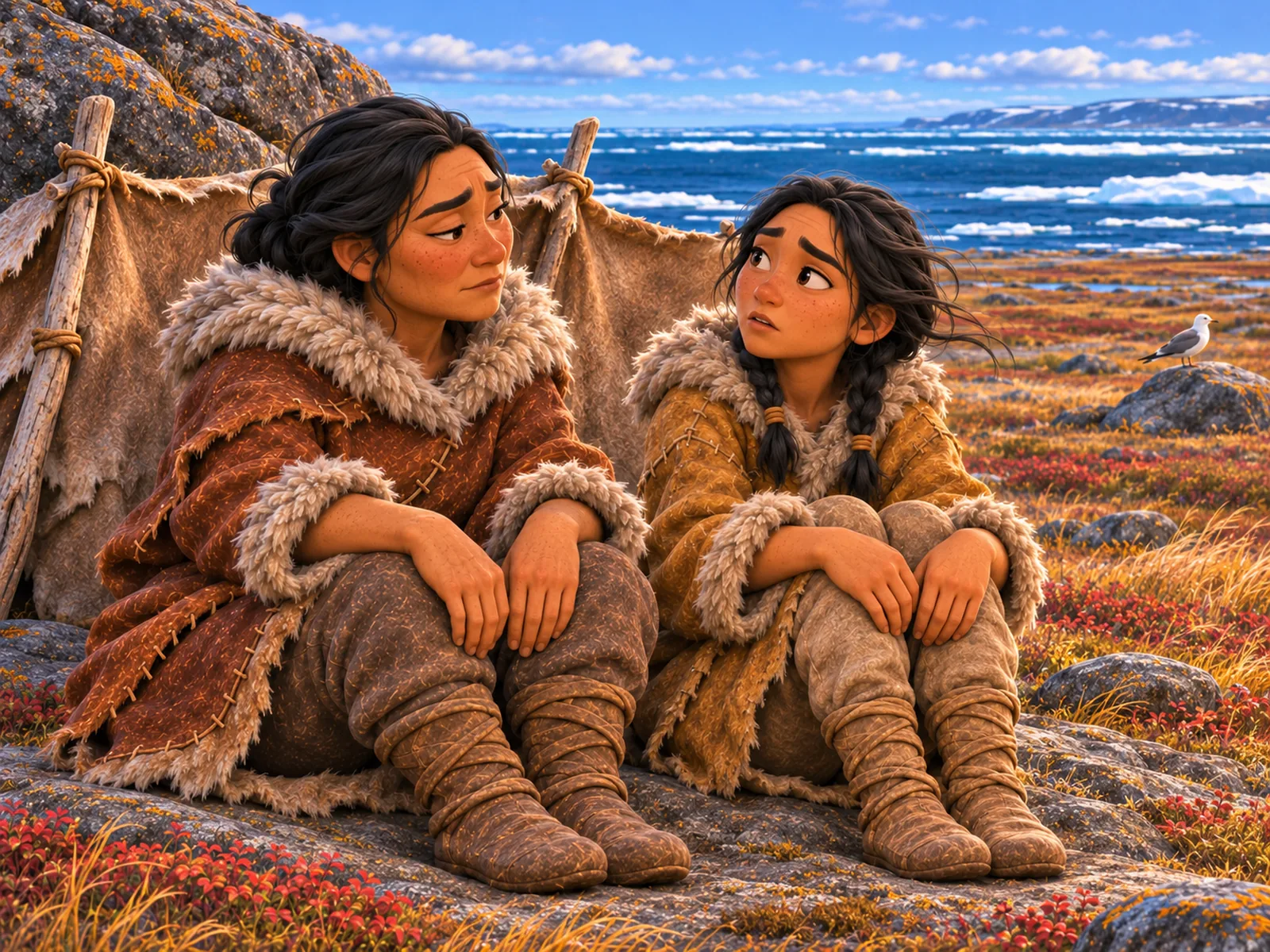
Qannik took her share outside. A little later Siku found her sitting near the shelter, looking toward the shore.
“I didn't want to eat in there,” Qannik said.
“All right.”
Siku sat beside her. Qannik shifted to make room for her. They sat close and ate without talking for a while.
A bird landed on the rock beyond them. Qannik watched it turn its head.
“Was that the kind they saw?” she asked.
Siku looked at the bird. She had been about to call to her mother and ask. The question had formed so easily that for a moment she could almost hear herself saying it.
“I don't know,” she said.
Qannik kept watching. The bird lifted off and went toward the water.
Siku finished eating. Qannik had left a little food in the hide fold, and Siku wrapped it for her without asking whether she wanted it saved. Qannik noticed but did not object.
When they went inside, someone had already folded the hide. Qannik asked if Siku needed help with the things by the opening.
“Yes,” Siku said.
They carried them together.
Another day
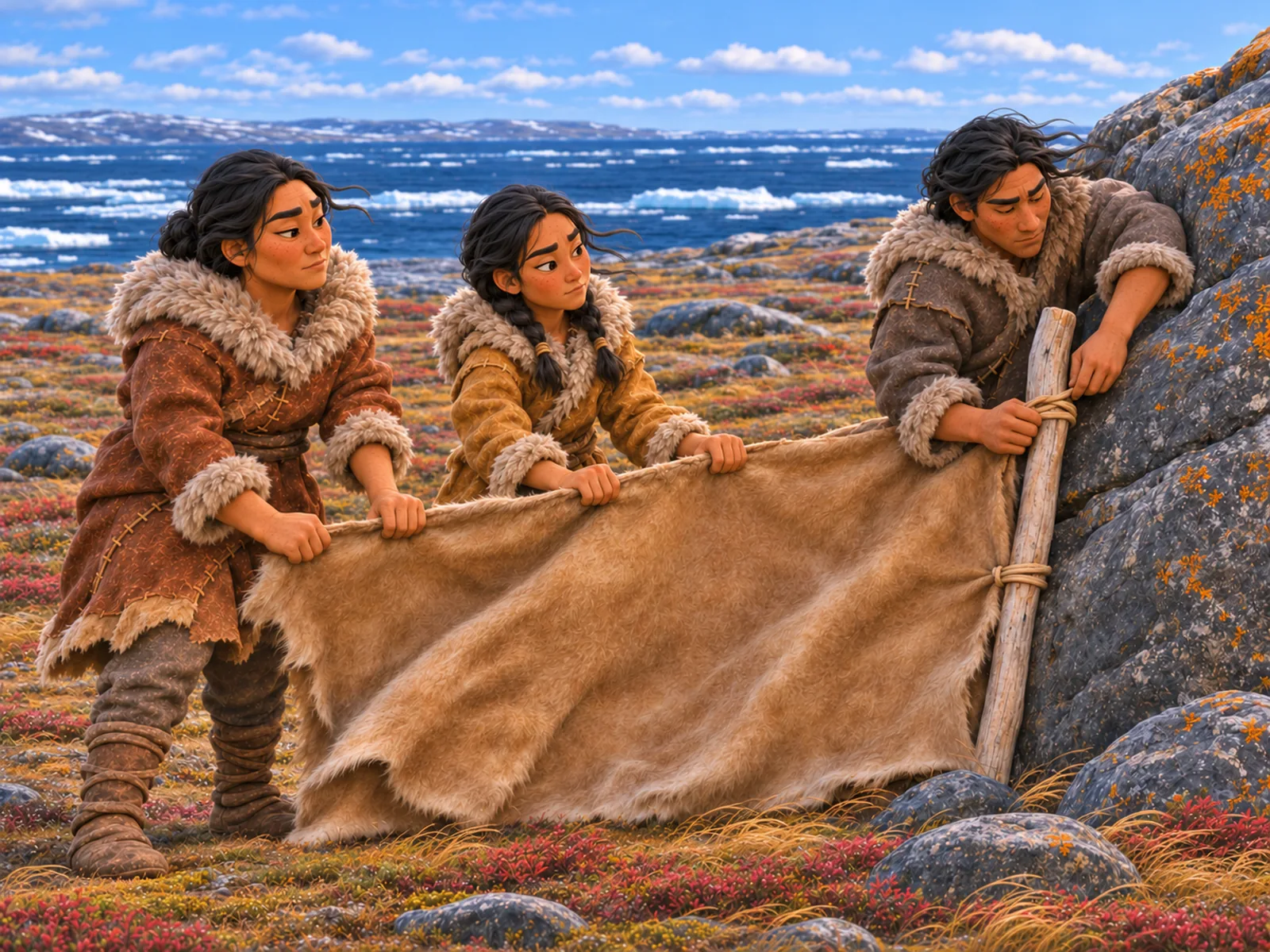
A few days later the wind came up again. People were securing the edge of a hide where it had worked loose, and Siku went to help. Qannik came with her, though Siku had told her she could stay inside.
“I know,” Qannik said. “I'm coming.”
They held the hide while another person fastened it. The wind caught it once and pulled it out of Siku's hands. Qannik caught the loose edge before it reached the ground, and all three of them had to take hold again.
When it was secure, they stood for a moment checking it. Qannik pressed the edge with her palm.
“Is that all right?” she asked.
Siku opened her mouth. The answer she heard in her head was her mother's: Ask me once more and I'll go back inside.
Qannik was watching her. Siku tried to say it, but her throat closed. She shook her head and tried again.
“It looks all right,” she managed.
Qannik came close. Siku put her arm around her, and they stood together while the wind moved over the ground beyond them.
Later they went to eat with the others. Siku kept a place for Qannik beside her and waited for her to come and sit.
She wanted to tell her mother about the hide. She wanted to hear the answer, even if it was that they had done it badly and would have to do it again.
Qannik sat beside her and passed her the food. Siku took it. She stayed there with her daughter, missing her mother.